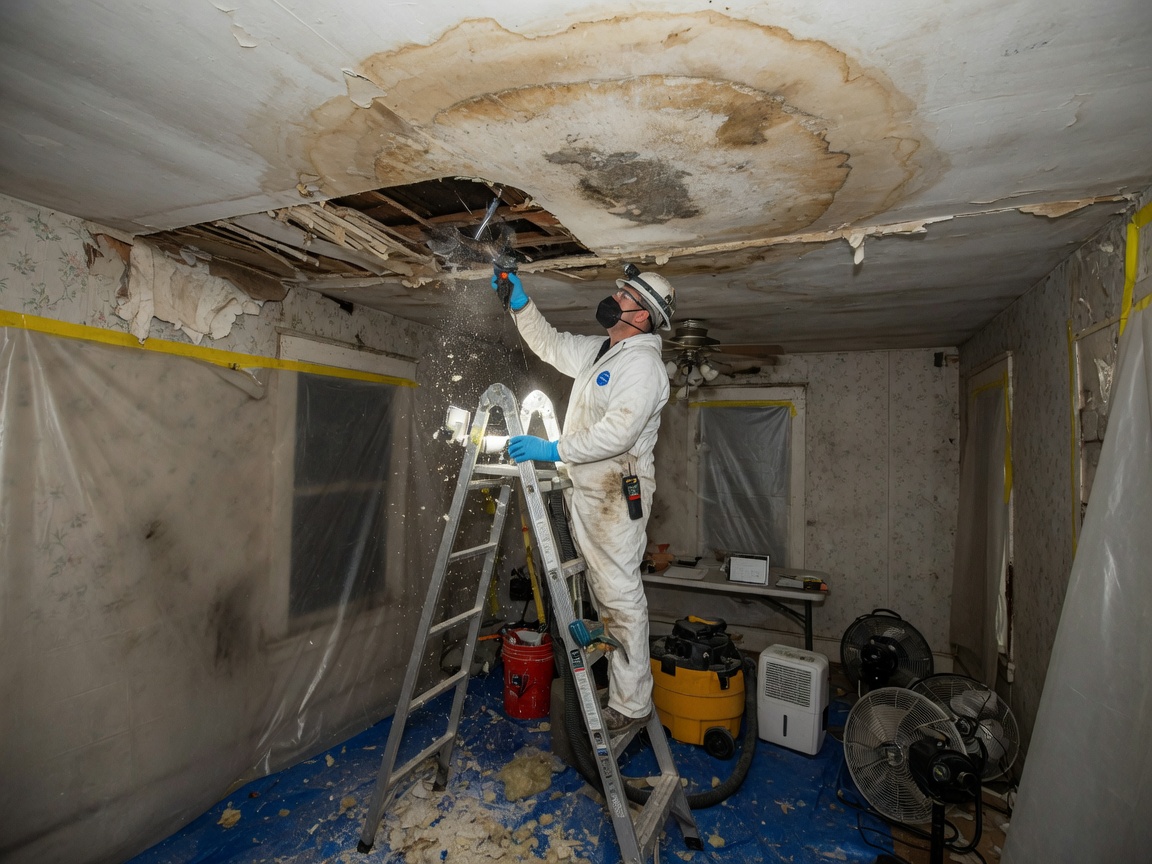
Centralia’s older housing stock in the Centralia Historic District and around Borst Park often features plaster ceilings over lath that hold moisture longer than modern drywall. Wet winters send rainwater through aging composition roofs and ice dams, letting water travel along joists before it shows as a stain. We map the full migration path with moisture meters because stopping at the visible spot leaves hidden saturation in insulation and framing that later feeds mold.
Mild summers do not dry out enclosed ceiling cavities fast enough, so we pull affected drywall or plaster sections, extract standing water, and run low-grain dehumidifiers until readings drop below 12 percent. Homes near Centralia College frequently have attic insulation that has been disturbed by previous repairs, which changes how water spreads and how long drying takes. We document every layer removed so homeowners can see exactly what was wet and why full removal was required.
When leaks originate from upstairs bathrooms or kitchen stacks, we coordinate with the plumbing path through the ceiling plane rather than patching only the finish surface. This prevents repeat calls after the next heavy rain that rolls through from Chehalis or Olympia.
We always check for knob-and-tube wiring in pre-1950 Centralia homes before introducing drying equipment, because wet conditions around those circuits create a different safety protocol than standard 12-2 romex.
Technician insight
In Centralia the thing that catches most people out with ceiling water damage is how far water travels along the joists in these 1920s–1940s homes before it shows up as a stain. A small roof leak near Borst Park can saturate twenty feet of ceiling toward the center of the house because the plaster never fully dries during our long wet winters.
Downtown Centralia second-floor leak
Water from a roof valley entered an attic in a 1930s home near the Centralia Historic District. We found saturated plaster extending into two bedrooms. We removed the affected sections, dried the joists, replaced insulation, and restored the ceilings without disturbing the original crown molding.
Ceiling Water Damage Restoration Services We Offer
✓Plaster Ceiling Restoration
Remove saturated plaster, treat lath, and match original textures in Centralia Historic District homes where modern drywall would stand out.
✓Drywall Ceiling Repair After Leak
Cut out water-damaged drywall, replace insulation, and blend new tape and texture so the ceiling matches the rest of the room.
✓Attic Condensation Drying
Address slow leaks from poor ventilation that appear during Lewis County’s long wet season without an obvious roof breach.
✓Ceiling Mold Remediation
Contain and remove mold growth that develops behind ceiling finishes after repeated winter leaks in Borst Park area homes.
✓Hidden Leak Detection
Use moisture mapping and thermal imaging to trace water from roof or plumbing sources through ceilings before visible damage spreads.
✓Insulation Replacement
Remove water-logged attic insulation and install new material rated for Centralia’s temperature swings between wet winters and mild summers.
Ceiling Water Damage Restoration Cost in Centralia, WA
| Service | Typical Range | What Affects It |
|---|---|---|
| Initial inspection and moisture mapping | $125–$225 | Includes written report; higher for multi-story or complex roof access in historic homes. |
| Drywall ceiling section replacement | $450–$950 | Per 4x8 sheet area; price moves with insulation removal and texture matching. |
| Plaster ceiling repair | $650–$1,400 | Higher in Centralia Historic District due to lath work and custom finish. |
| Full attic drying package | $800–$1,600 | Includes equipment rental period and insulation replacement for typical Lewis County home. |
Ranges are typical for Centralia, WA and confirmed with an exact written quote before any work starts.
How it works
- 1
On-Site Assessment
We arrive from our Main Street location and document moisture levels, affected materials, and the suspected water source using meters and thermal imaging.
- 2
Water Extraction and Containment
Standing water is removed and the area is isolated to prevent spread into unaffected rooms or neighboring units in multi-family buildings.
- 3
Drying and Monitoring
Equipment runs until moisture readings stabilize, with daily checks logged for insurance and homeowner records.
- 4
Repair and Finish
Damaged sections are replaced, textures matched, and paint applied once the structure tests dry.
Pricing
Most ceiling jobs start with an inspection and scale with square footage and whether plaster or multiple layers are involved.