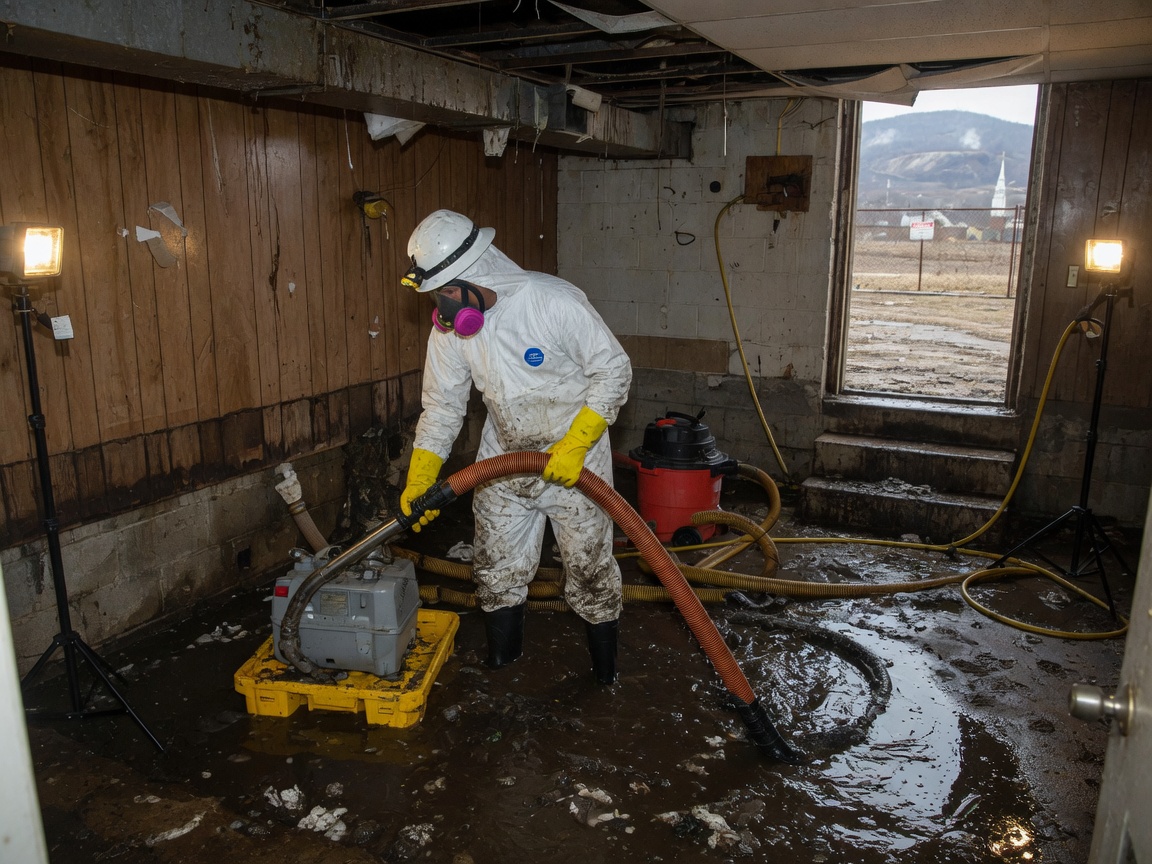
Centralia’s wet winters often push older sewer lines in the Centralia Historic District and Borst Park area past capacity, sending contaminated water into basements and crawl spaces of homes built before modern codes. We extract standing sewage, remove affected subflooring and insulation, and apply EPA-registered disinfectants to eliminate pathogens that thrive in the region’s damp soil. Every job includes moisture mapping with thermal cameras because hidden moisture behind plaster walls in these older structures can trigger mold within days once mild summer temperatures arrive.
Lewis County clay soils hold water longer than sandy ground, so backups near Centralia College frequently migrate under slabs and into neighboring properties along W Main Street. Our technicians isolate the source, set up negative-air containment to protect unaffected rooms, and haul away Category 3 waste to approved facilities rather than attempting on-site treatment. Homeowners in Downtown Centralia learn quickly that carpet padding and particleboard cabinets must be cut out completely; surface cleaning alone leaves bacteria that reappear after the next heavy rain.
We coordinate with local plumbers when tree-root intrusion or collapsed lines in the 98531 zip code require excavation, then return to finish drying and sanitizing once repairs are complete. Documentation of moisture readings and photos is provided so insurance adjusters see exactly what was removed and why, avoiding disputes common with partial cleanups in Chehalis and Olympia referrals.
Technician insight
In Centralia the thing that catches most people out with sewage backups is how the wet winters and heavy clay soils around Borst Park let water travel under slabs and into neighboring lots before anyone notices; once it reaches the Historic District’s plaster walls the damage spreads fast and partial cleanups always fail.
Downtown Centralia Basement Backup
Heavy rain overwhelmed an old clay line behind a 1920s home near the Historic District. Sewage reached the finished basement and wicked into drywall on two walls. We extracted the water, removed the lower four feet of drywall and insulation, disinfected the slab and joists, then dried the space over four days until readings were safe.
Sewage Backup Cleanup & Sanitation Services We Offer
✓Sewage Extraction From Crawl Spaces
Pump and remove contaminated water from Centralia crawl spaces, then treat soil and joists to stop odor and bacterial migration into living areas.
✓Biohazard Sanitation Protocols
Apply hospital-grade disinfectants and fogging agents to all porous and non-porous surfaces after sewage contact in Lewis County homes.
✓Contaminated Drywall and Insulation Removal
Cut out and dispose of water-damaged drywall, insulation, and baseboards in older Historic District homes where moisture travels behind walls.
✓Slab Leak Sewage Cleanup
Address sewage that has wicked under concrete slabs common in Borst Park area properties, including drilling weep holes and drying the sub-slab.
✓Odor Removal and Air Scrubbing
Run HEPA air scrubbers and apply odor counteractants to eliminate sewage smells that linger in Centralia’s older, tightly sealed homes.
Sewage Backup Cleanup & Sanitation Cost in Centralia, WA
| Service | Typical Range | What Affects It |
|---|---|---|
| Crawl space sewage extraction | $900–$2,200 | Higher when clay soil saturation requires extra drying time in winter. |
| Basement room sanitation | $1,400–$3,100 | Varies with square footage and amount of drywall or carpet removal. |
| Slab subfloor drying add-on | $600–$1,400 | Needed when water migrates under concrete in older Downtown homes. |
Ranges are typical for Centralia, WA and confirmed with an exact written quote before any work starts.
How it works
- 1
Emergency Assessment
Arrive at the Centralia property, identify the backup source, and map the full extent of contamination using moisture meters.
- 2
Containment And Extraction
Set up physical barriers, pump out sewage, and remove solid waste before it spreads to unaffected rooms.
- 3
Removal Of Affected Materials
Cut away and haul off drywall, flooring, and insulation that cannot be salvaged.
- 4
Sanitation And Drying
Disinfect all surfaces, then use air movers and dehumidifiers until moisture readings reach safe levels.
- 5
Final Clearance
Document dry conditions and provide a written report for insurance or landlord records.
Pricing
Pricing depends on the volume of water, number of affected rooms, and whether structural materials must be removed.