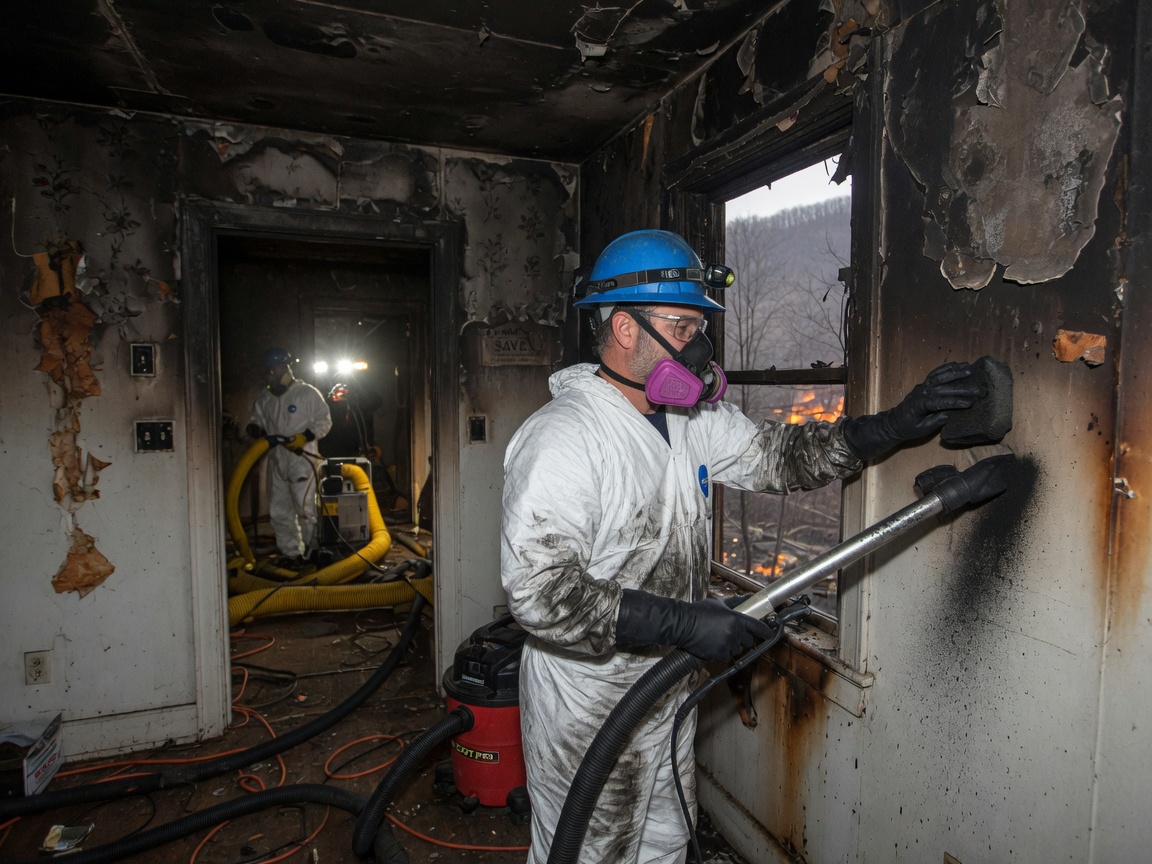
Soot from residential fires bonds quickly to surfaces in Centralia’s pre-1950 housing stock, especially the plaster and lathe walls common in the Centralia Historic District. Wet winters increase moisture absorption, turning loose soot into stubborn stains that standard wiping spreads rather than removes. Technicians must use pH-neutral cleaners and HEPA vacuums first, then test small areas before applying solvents that could damage original wood trim found around Borst Park homes.
HVAC systems in Lewis County homes often pull soot into ductwork during winter heating cycles, requiring full trunk-line access rather than register-only cleaning. Mild summers allow faster drying after treatment, but high humidity from nearby Chehalis and Olympia weather patterns can re-wet residues if dehumidification is skipped. Edge cases include soot migration through balloon framing in two-story homes near Centralia College, where vertical cavities must be opened to prevent hidden re-soiling.
Code considerations in Centralia include ensuring negative air pressure during removal to avoid spreading particles to neighboring units in multi-family buildings along the historic district. Homeowners should never attempt DIY cleaning on textured ceilings, as water-based methods common in water damage work can set soot permanently into the finish.
Technician insight
In Centralia, the thing that catches most people out with Soot Damage Removal is how wet winters let soot particles travel deeper into the balloon-framed walls of homes in the Centralia Historic District near Borst Park, requiring extra time to open cavities that homeowners assume are clean after surface wiping.
Kitchen Fire Soot in Downtown Centralia
A cooking fire left heavy soot on cabinets and ceilings in a 1920s home near Centralia College. Inspection showed particles had entered the forced-air ducts during winter use. Crews contained the kitchen, performed dry cleaning on plaster surfaces, cleaned the HVAC trunk lines, and ran dehumidifiers for two days before final air testing cleared the space.
Soot Damage Removal Services We Offer
✓Fireplace Soot Removal
Targeted extraction of creosote and soot buildup from brick and tile fireplaces common in Centralia Historic District homes.
✓Kitchen Soot Cleanup
Removal of cooking-related soot from cabinets, ceilings, and appliances in older Lewis County kitchens.
✓HVAC Soot Cleaning
Duct and register cleaning to eliminate soot circulated through heating systems during Centralia’s wet winters.
✓Wall and Ceiling Soot Extraction
Gentle cleaning of plaster and drywall surfaces in Borst Park area homes without damaging historic finishes.
✓Attic Soot Removal
Insulation and rafter cleaning in Centralia attics where soot settles after chimney or electrical fires.
Soot Damage Removal Cost in Centralia, WA
| Service | Typical Range | What Affects It |
|---|---|---|
| Initial Assessment | $125–$225 | Includes photos and written scope for Centralia homes |
| Single Room Soot Removal | $450–$850 | Higher for plaster walls in historic district properties |
| HVAC Soot Cleaning Add-On | $300–$600 | Depends on system size and access in older homes |
| Full Home Soot Restoration | $1,800–$4,200 | Varies with square footage and insulation condition |
Ranges are typical for Centralia, WA and confirmed with an exact written quote before any work starts.
How it works
- 1
On-Site Assessment
Technicians inspect affected rooms in Centralia homes, noting soot depth on plaster, wood, and HVAC components.
- 2
Containment Setup
Plastic barriers and negative air machines isolate work zones to prevent particle migration to unaffected areas.
- 3
Dry Cleaning
HEPA vacuums and chemical sponges lift loose soot before any liquid products are introduced.
- 4
Deep Cleaning And Drying
pH-balanced solutions treat bonded residues, followed by dehumidification suited to Lewis County humidity levels.
Pricing
Pricing varies by room count, soot penetration depth, and whether HVAC cleaning is required.